Why Does Gouache Turn Muddy? Color Mixing Chart & Simple Rules
Learn why gouache colors become dull or brown, how to use the color wheel with confidence, and which mixing habits keep your palette clean and vibrant.
Quick answer: Gouache turns muddy mainly for three reasons — mixing too many colors at once, combining colors from opposite sides of the color wheel without intention, and overworking wet paint on the page. Avoid all three with the chart and rules below, and most “muddy mix” problems disappear.


Why Gouache Turns Muddy — And It Is Not the Paint’s Fault
Muddy color is rarely a sign of low-quality paint. It is a mixing problem, and it happens with expensive professional gouache just as easily as with student-grade sets. The three most common causes are:
Too many colors
Each additional color pulls the mix further toward gray-brown, especially once you go beyond two colors.
Complements by accident
Opposite colors, like red and green, naturally neutralize each other when mixed together.
Overworking wet paint
Scrubbing a brush back and forth picks up and blends colors that were meant to stay separate.
The Color Wheel Basics You Actually Need
You do not need a full color theory course to mix clean gouache — just three ideas:
- Primary colors — red, yellow, and blue — combine to make every other color.
- Secondary colors — orange, green, and purple — come from mixing two primaries.
- Complementary colors sit opposite each other on the wheel. Red and green, blue and orange, yellow and purple cancel each other out into gray or brown. This is useful on purpose and a problem by accident.

Gouache Color Mixing Chart: Primary & Secondary Combinations
| Mixing | Result | Mud Risk | Tip |
|---|---|---|---|
| Red + Yellow | Orange | Low | More yellow than red gives a brighter, cleaner orange. |
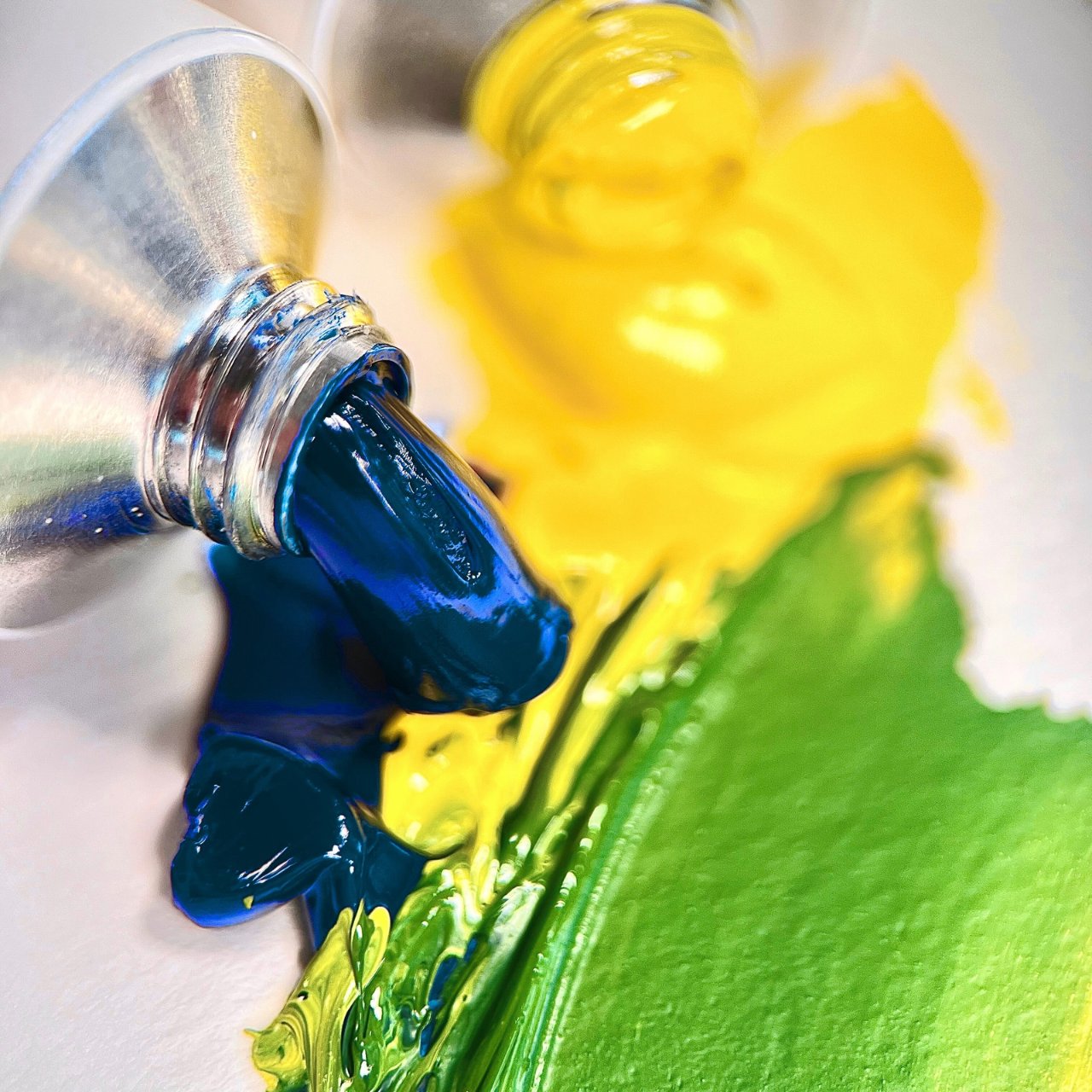
| Yellow + Prussian Blue | Green | Low | Start with yellow and add blue gradually. Too much blue shifts toward a dull, muddy green. |
| Red + Blue | Purple / Violet | Medium | Use a red with a blue bias and a blue with a red bias for a cleaner violet. Warm red + cool blue often turns gray. |
| Red + Green | Brown / Gray-brown | High | These are complements. Only mix them on purpose for shadows or neutrals. |
| Blue + Orange | Gray / Brown | High | Same complementary effect. Great for muting a color intentionally. |
| Yellow + Purple | Olive / Gray-brown | High | Use sparingly to dull a color, not to brighten one. |
| Any 3+ colors mixed together | Unpredictable gray / brown | Very High | This is the #1 cause of accidental mud. Use the Two-Color Rule below. |
Mixing Earth Tones, Skin Tones, and Neutrals Without Mud
Earth tones and skin tones use the same complementary effect that causes accidental mud. The difference is that here, it is intentional and controlled.
- Skin tones: start with a small amount of red and yellow plus white, then add a tiny touch of the complementary blue or green only to soften, not flatten, the color.
- Earth tones: browns, ochres, and grays often come from a warm earth red with a cool blue in a deliberate, small ratio.
- The key difference between “neutral” and “muddy”: a neutral is controlled and intentional. A muddy mix is the same gray-brown produced by accident, usually from too many colors or too much water reactivating old mixes on the palette.

The Two-Color Rule That Prevents Most Muddy Mixes
Limit most mixes to two colors plus white.
If a mix needs a third color to look “right,” it usually means the first two colors were not close enough on the color wheel to begin with. Swap one of them instead of adding a third.
One related trap: adding white does not fix a muddy mix. It only lightens it, often creating a pale, chalky version of the same dull color. If you notice you are reaching for white constantly to “rescue” mixes rather than to genuinely lighten a color, the real fix is usually a cleaner starting pair, not more white.
What To Do If a Mix Already Looks Muddy
- Do not add more colors to “fix” it — this almost always makes it worse.
- Isolate the problem color — wipe your brush and palette area completely before trying again with a fresh, smaller amount.
- Use it intentionally instead — most “mud” makes a perfectly good shadow tone, background neutral, or texture base. Keep a small dedicated spot on your palette for these rescued neutrals rather than scraping them off.
Building a Mixing-Friendly Palette
Color count matters less for clean mixing than color selection does. A small, well-chosen palette mixes more predictably than a large palette used carelessly.
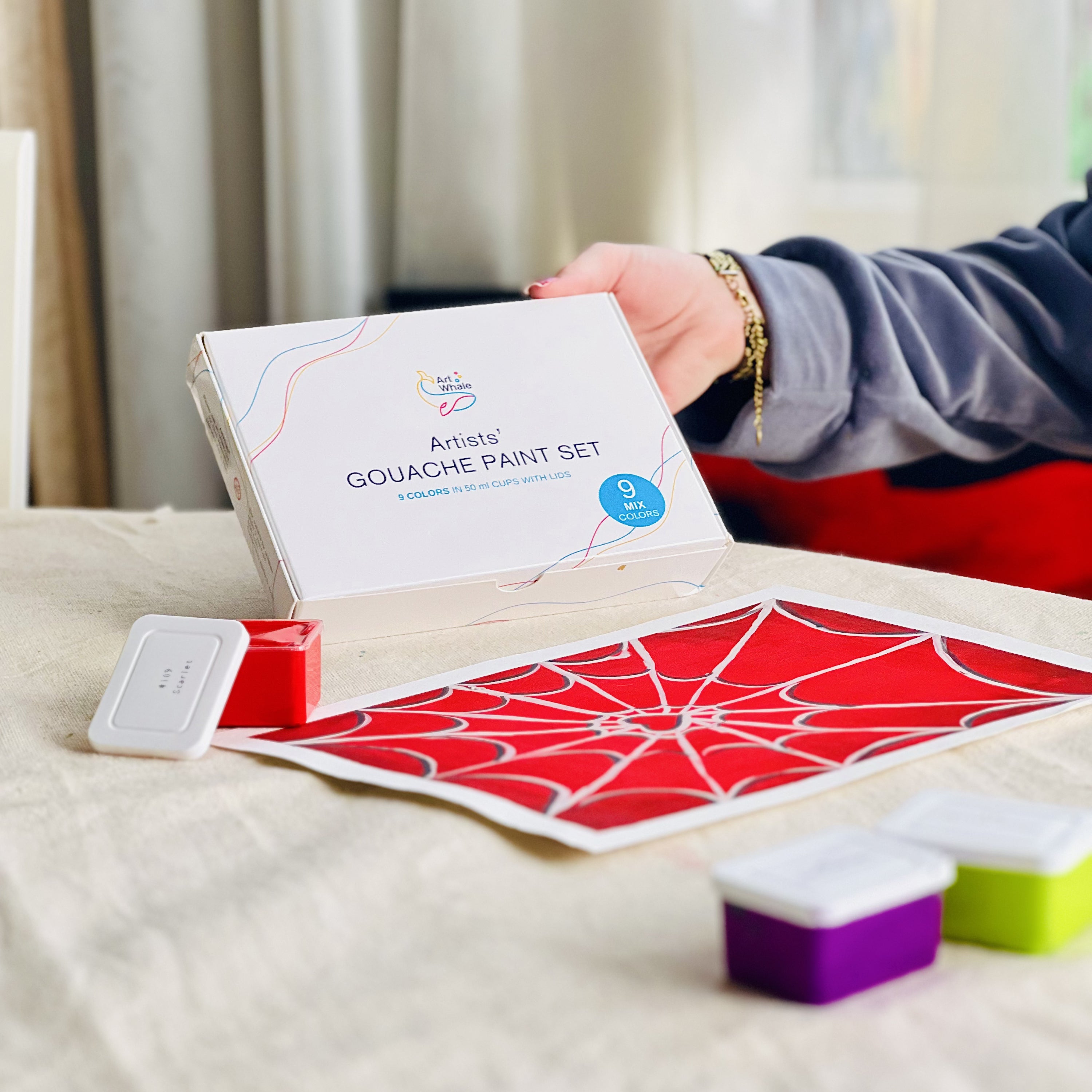
- The Art Whale 9-Color Gouache Set is built around primaries and basics specifically chosen to mix cleanly — ideal for practicing the chart above without guesswork.
- The Art Whale 42-Color Gouache Set includes pre-mixed earth tones and neutrals already in the cup — useful once you know which “mud” you actually want, without mixing it from scratch every time.
Art Whale Gouache Paint Set – 9 Basic Colors in 50ml Cups with Lids, Refillable

Art Whale Gouache Paint Set – 9 Metallic Colors in 50ml Cups with Lids, Refillable

Art Whale Gouache Paint Set – 9 Mix Colors in 50ml Cups with Lids, Refillable

Art Whale Gouache Paint Set – 9 Pastel Colors in 50ml Cups with Lids, Refillable

Quick Reference: Mixing Chart Checklist
Frequently Asked Questions
Why does my gouache always turn brown?
This is almost always caused by mixing three or more colors, or by combining complementary colors, like red and green or blue and orange, without intending to neutralize them.
Can you fix a muddy gouache mix?
You cannot “unmix” it, but you can usually repurpose it as a shadow tone or neutral background color rather than starting over completely.
Do I need a color wheel to mix gouache?
Not necessarily, but knowing which colors are complementary, or opposite on the wheel, is the single most useful piece of color theory for avoiding accidental mud.
What colors should I avoid mixing together?
You do not need to avoid any combination — but mixing complementary pairs, like red/green, blue/orange, and yellow/purple, will neutralize color fast, so use them on purpose rather than by accident.
Keep Learning
Bottom Line
Muddy gouache is a mixing-habit problem, not a paint-quality problem. Stick to two colors plus white, understand which pairs are complementary, and keep a clean brush between colors — and most “mud” simply stops happening.
Ready to put the chart into practice? Browse the full Art Whale gouache collection to find a palette that matches how you like to mix.
Explore Gouache Paints```